Back to top
08045802743
Send SMS    Call Me Free Send Inquiry

Non Destructive Testing

Discover the exceptional quality of our Non Destructive Testing, where over 29.0 years of unmatched experience has positioned us as a leader in this highly specialized field. Our services, including Radiography Testing, Insitu Hardness Testing Services, Liquid Penetrant Testing, Positive Material Identification, and Visual Testing, exemplify spectacular precision and reliability. Offering supreme accuracy and highly customizable solutions, our Non Destructive Testing methods stand out as a featured choice for industries requiring the utmost scrutiny and safety. Designed to detect material flaws without causing damage, these cutting-edge techniques ensure optimal performance and longevity of critical components. With the best combination of efficiency, cost-effectiveness, and eco-friendliness, our methods suit a broad range of applications. Advantages include enhanced safety, minimized downtime, reduced material wastage, comprehensive defect detection, and improved compliance with industry standards. As a trusted provider, we supply an unbeatable hot deal on Non Destructive Testing in the domestic market of North India and as an exporter across Asia, delivering scalable solutions that cater to your unique requirements with excellence.

Insitu Hardness Testing Services

  • Display
  • Digital LCD Display
  • Driven Type
  • Electric
  • Frequency
  • 50 Hertz (Hz)
  • Interface
  • Digital
  • Material
  • Steel
  • Measuring Range
  • 150-950 HLD
  • Power
  • Battery Powered
  • Size
  • Portable
  • Temperature
  • 0-50 Degree Celsius
  • Usage & Applications
  • Hardness Testing of Metal Components On Site
  • Voltage
  • 110-230 Volt (v)
  • Weight
  • 2-3 Kilograms
Hardness of metals is very important property which could help us understand how would metals behave. Keeping the hardness value under check is very important for it can have very adverse effect on life of equipment if not checked and controlled properly.

Ultrasonic Testing

  • Display
  • Digital LCD Display
  • Driven Type
  • Electric
  • Frequency
  • 1 MHz 10 MHz
  • Interface
  • Digital, USB/Data Port
  • Material
  • Stainless Steel
  • Measuring Range
  • 1 mm 300 mm (in steel)
  • Power
  • Battery Operated / Mains Powered
  • Size
  • Portable, Handheld Unit
  • Temperature
  • Operating: 0C to 50C
  • Usage & Applications
  • Flaw Detection, Thickness Measurement, Weld Inspection
  • Voltage
  • 220 V AC
  • Weight
  • Approx. 2-3 kg

Radiography Testing

  • Display
  • Digital Display
  • Driven Type
  • Electric
  • Frequency
  • 50 Hertz (HZ)
  • Interface
  • Digital Interface
  • Material
  • Mild Steel
  • Measuring Range
  • Varies as per model
  • Power
  • 50 Watt (w)
  • Size
  • Customizable
  • Temperature
  • 0 to 50 Degree Celsius
  • Usage & Applications
  • Non Destructive Testing, Inspection of Welds, Casting, Forging, and Structural components
  • Voltage
  • 220 Volt (v)
  • Weight
  • 7 Kilograms (kg)
Radiography Testing using Gamma Rays and X Rays are done to determine flaws which are inside the surface of material.

Visual Testing

  • Display
  • LCD/LED
  • Driven Type
  • Electric
  • Frequency
  • 50 Hz
  • Interface
  • Digital display
  • Material
  • mild steel
  • Measuring Range
  • Up to 100 mm (depth)
  • Power
  • 20W
  • Size
  • Portable / Handheld
  • Temperature
  • 0 to 50C
  • Usage & Applications
  • Weld inspection, surface flaw detection, quality control
  • Voltage
  • 220V AC
  • Weight
  • 1.5 kg
Visual Inspection or Visual Testing is the most basic and yet the most important type of inspection.

Liquid Penetrant Testing

  • Driven Type
  • Manual
  • Interface
  • Manual application (spray, brush, or immersion)
  • Material
  • Liquid Penetrant (chemically formulated for non-destructive testing)
  • Measuring Range
  • Surface defect detection (visibility depends on flaw size and test surface)
  • Size
  • Standard container sizes: 1 Litre, 5 Litres, 20 Litres (others available on request)
  • Temperature
  • Optimal working temperature: 10C to 50C
  • Usage & Applications
  • Detection of surface-breaking defects on ferrous and non-ferrous metals, ceramics, and non-porous materials. Widely used in metal fabrication, aerospace, automotive, and welding inspection.
  • Weight
  • Varies with container size
Liquid Penetrant Testing or Dye Penetrant testing is used for detection of surface flaws on materials like plates, pipes, tubes, welds, castings, forgings, etc. Onky those flaws which are open to the surface can be detected.

Non Destructive Testing Services

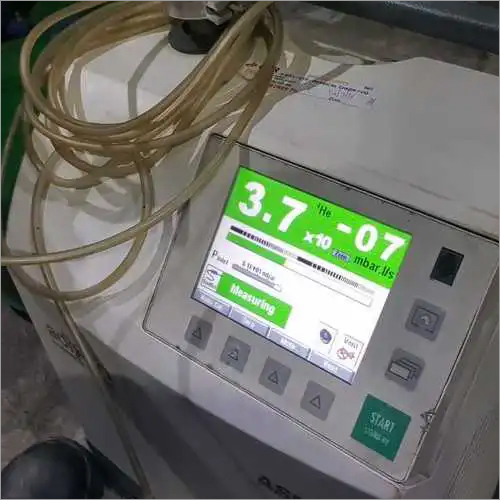
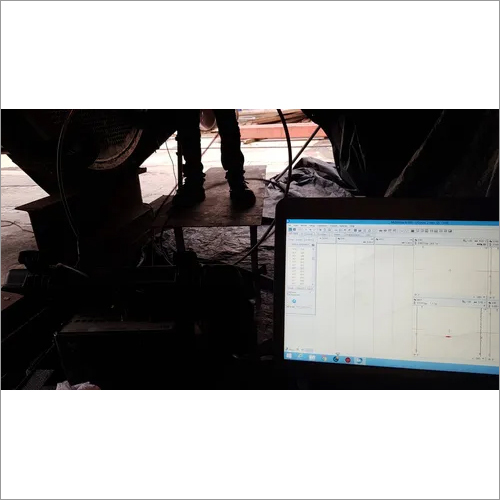
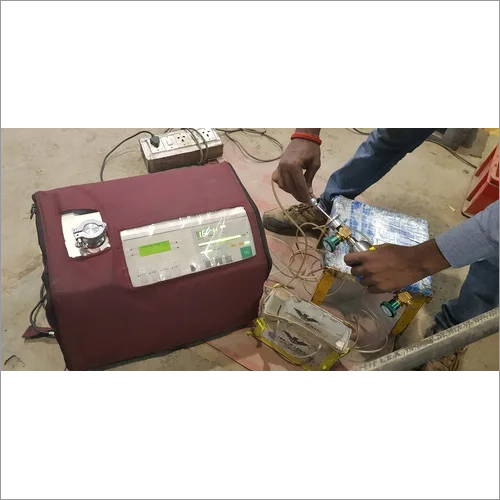
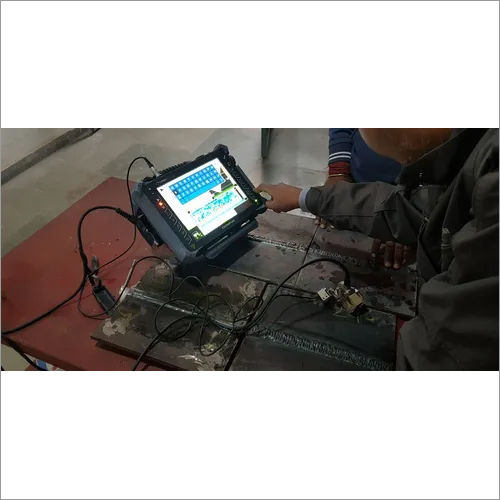
Non Destructive Testing or NDT methods are used to inspect items especially metals to identify flaws or defects inside or on them without damaging the those items. NDT includes tests like Ultrasonic Testing, Radiography Testing, Magnetic Particle Testing, Dye Penetrant Testing, Helium Leak Testing, Eddy Current testing, Remote Field Eddy Current testing, Oxide Scale Measurement, Ultrasonic Thickness Measurement, Positive Material Identification, Phased Array Ultrasonic Testing, Time of Flight Diffraction, etc.

Magnetic Particle Testing

Magnetic Particle Testing of welds, turbine blades, rotors, shafts and other mechanical components for detection of surface and sub surface flaws. It uses the principle of Mangetic Flux Leakage for detection of flaws.

Ultrasonic Thickness Measurement

  • Display
  • 4-digit LCD
  • Driven Type
  • Battery operated
  • Frequency
  • 5 MHz
  • Interface
  • User-friendly keypad with LCD display
  • Material
  • ABS Plastic
  • Measuring Range
  • 1.2 mm - 225.0 mm (in steel)
  • Power
  • 3V (2 x AA batteries)
  • Size
  • 150 mm x 74 mm x 32 mm
  • Temperature
  • -10C to 60C (operating)
  • Usage & Applications
  • Measuring thickness of metals, pipes, tanks, and other materials
  • Voltage
  • 2 x 1.5V AA batteries
  • Weight
  • 230 g (including batteries)
Ultrasonic Thickness Measurement also referred as Ultrasonic Thickness Gauging is used for measuring thickness of pipes, boiler tubes, plates, etc

Positive Material Identification

  • Display
  • Digital LCD Touch Screen
  • Driven Type
  • Battery Operated
  • Frequency
  • 50/60 Hz
  • Interface
  • USB / Bluetooth
  • Material
  • Stainless Steel
  • Measuring Range
  • Up to 30 Elements
  • Power
  • Li-Ion Battery
  • Size
  • Handheld
  • Temperature
  • 0C to +50C
  • Usage & Applications
  • Positive Material Identification (PMI) in metals and alloys, including quality assurance and sorting
  • Voltage
  • Rechargeable Battery, 7.4V
  • Weight
  • 2.5 kg (Approx)
Positive Material Identification also known as PMI is XRF based equipment which is used for confirmation of metal/alloy grades like Steel, Stainless Steel, Copper, Nickle, etc.