 English
 Spanish
 French
 German
 Italian
 Chinese (Simplified)
 Japanese
 Korean
 Arabic
 Portuguese



 Send Inquiry
Internal Rotatory Inspection System
Internal Rotatory Inspection System Specification
- Material
- Stainless Steel
- Frequency
- 50 Hz
- Usage & Applications
- Inspection of internal surfaces of pipes and tubes
- Display
- High-resolution LCD
- Driven Type
- Motorized
- Temperature
- Operating range 0C to 60C
- Interface
- Digital & Analog options
- Power
- 100 W
- Weight
- Approx. 10-15 kg
- Measuring Range
- 40 mm to 400 mm (internal diameters)
- Size
- Customizable as per requirement
- Voltage
- 230 V AC
- Lighting
- Integrated LED ring illumination
- Cable Length
- 15 meters (extendable)
- Operating Humidity
- Up to 95% non-condensing
- Rotation Angle
- 360-degree continuous rotation
- Resolution
- Up to 1920x1080 pixels (Full HD)
- Image Capture
- Still image and video recording capability
- Mounting
- Tripod or portable handheld
- Safety Features
- Overload and overheat protection
- Control Method
- Remote control with real-time video feed
- Accessories Included
- Carrying case, control unit, cables
- Camera Type
- High-definition rotatory camera
Internal Rotatory Inspection System Trade Information
- Payment Terms
- Cash on Delivery (COD), Cash Against Delivery (CAD), Cash in Advance (CID), Cheque, Cash Advance (CA)
- Sample Available
- Yes
- Main Export Market(s)
- Middle East, Africa, Asia
- Main Domestic Market
- North India
- Certifications
- ASNT, ISO, NABL
About Internal Rotatory Inspection System
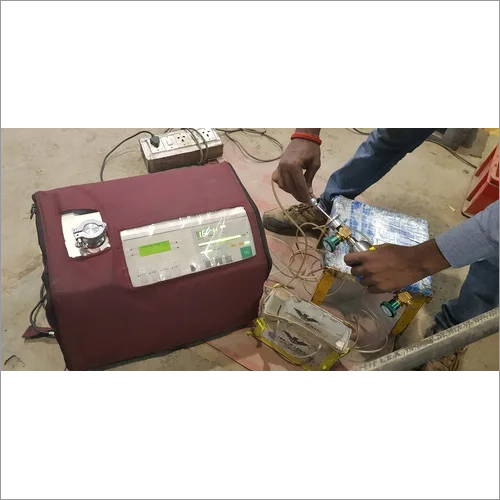
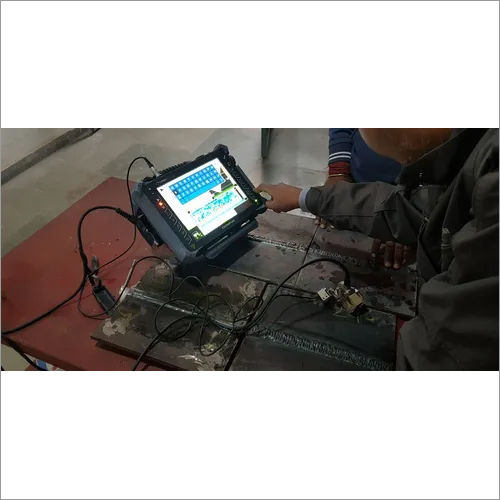
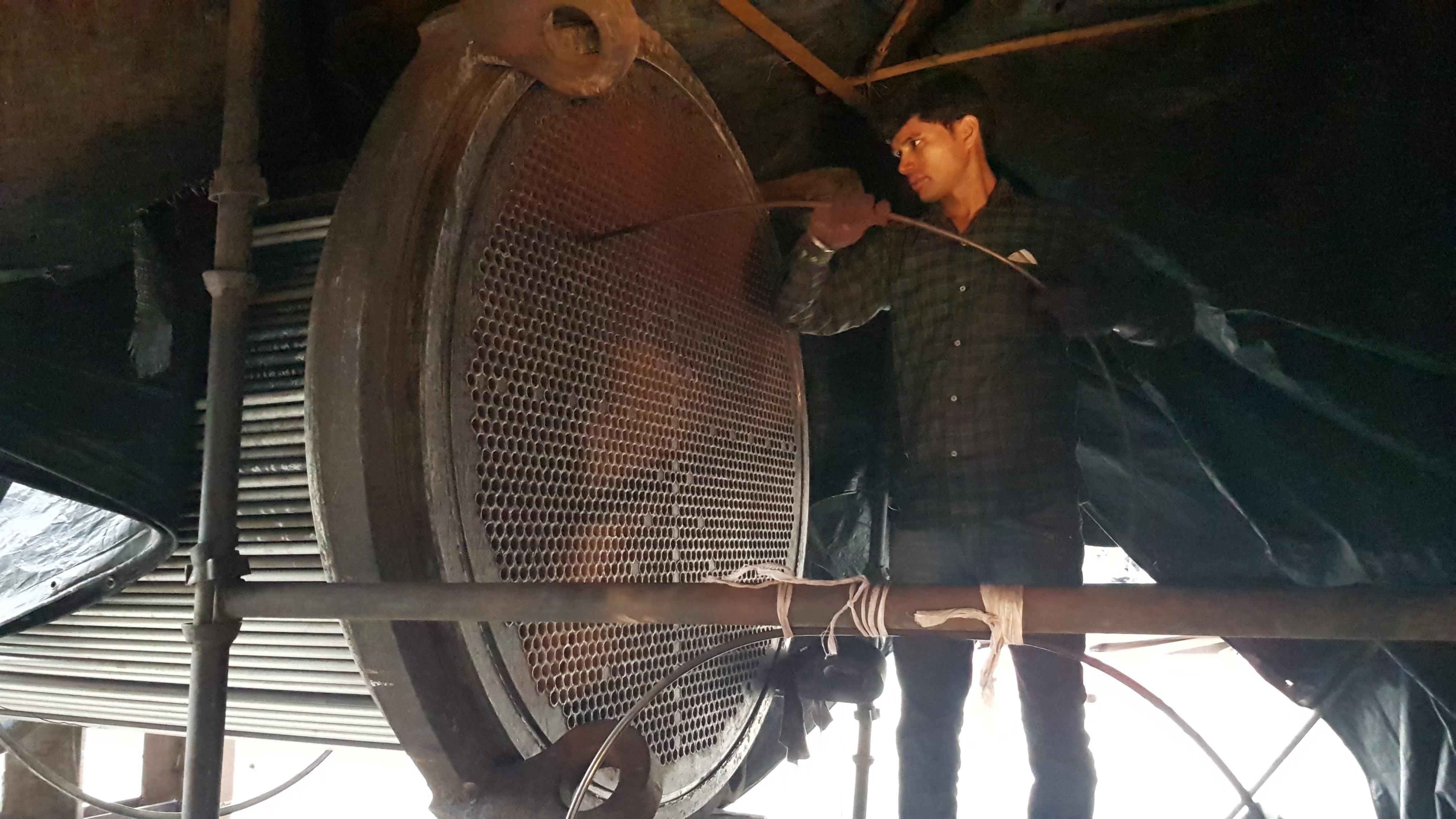
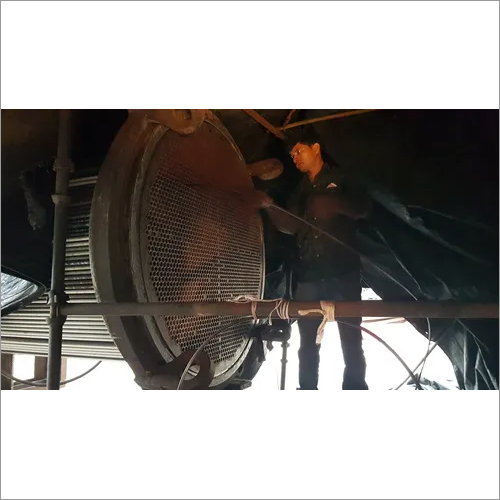
IRIS is used ofinspecting the internal of tupes/pipes which otherwise are not accessible fortesting with any other methods. Unlike Eddy Current Testing or RFET, it cantell us the exact thickness of the are under inspection and the flaw itself.
With Internal Rotary Inspection System, we can detectcorrosion, pitting and wallloss and is commonly used for tube inspection in boilers, heat exchangers, aircoolers and feed water heaters. It is particularly versatile as it is suitablefor both ferrous and non-ferrous materials, and IRIS can be used on a widerange of tube diameters and wall thicknesses.
An IRIS probe is inserted into a tube flooded with water. The probe is fittedwith a turbine and a transducer that generates an ultrasonic pulse along a pathparallel to the axis of the tube. A rotating mirror directs the ultrasonicpulse into the tube wall. The mirror is driven by a small turbine that isrotated by the pressure of water pumped into the tube.
Ultrasonic Pulses are reflected from the outer dia of the tube and then returnto the IRIS probe/sensor and gives us the indication of flaw, if any.
As the IRIS probe is pulled, the spinning motion of the mirror results in ahelical scan path ensuring full coverage of the tube.
Benefits of using IRIS include:
- Suitability for both ferrous and non-ferrous materials
- Detection of corrosion, pitting and thickness loss
- Accurate wall thickness measurements
- Sensitivity to both internal and external defects
- Defect position can be located in relation to tube length
- Complete coverage of the tube
- Results data storage
- Flexibility as a back-up to remote field, magnetic flux leakage and eddy current inspections.
Areas Served :- Delhi, Uttar Pradesh, Haryana, Punjab, Maharashtra, Bihar, Rajasthan, Himachal Pradesh, Uttarakhand, Madhya Pradesh, Jammu & Kashmir, Gujarat, Sikkim, Greater Noida, Ghaziabad, Noida, Nepal, Entire North India and South India, United Arab Emirates, Dubai, Qatar, Saudi Arabia, Africa, Egypt, Bahrain, Oman, etc.
Precision in Pipe and Tube Inspections
This inspection system is specifically crafted for internal surfaces of pipes and tubes ranging from 40 mm to 400 mm in diameter. Its advanced rotatory mechanism paired with HD video capture ensures comprehensive evaluation of challenging, confined spaces, aiding industries in preventing undetected faults and minimizing downtime.
Remote-Controlled Operation and Real-Time Monitoring
Inspection tasks become more efficient with the remote-controlled rotation and real-time high-resolution video feed displayed on an LCD screen. Operators can capture images and record videos to document findings for thorough analysis and easy reporting, streamlining quality assurance and maintenance procedures.
Rugged Design for Reliability
Manufactured from stainless steel and built to withstand harsh environments, the system offers robust safety features, including overheat and overload protection. Its adaptable design (tripod or handheld use) and comprehensive kitincluding a carrying case and control unitmake it ideal for on-site service across varying industrial applications in India.
FAQs of Internal Rotatory Inspection System:
Q: How is the Internal Rotatory Inspection System operated during an inspection?
A: The system features a remote control, allowing users to maneuver the high-definition rotatory camera with 360-degree continuous rotation. The integrated LED ring ensures excellent illumination while a high-resolution LCD displays a real-time video feed for precise internal inspection.Q: What types of pipes or tubes can this inspection system assess?
A: This inspection system is designed for internal examination of pipes and tubes ranging from 40 mm to 400 mm in internal diameter, making it ideal for a broad spectrum of industrial and infrastructure applications.Q: When should I use the Internal Rotatory Inspection System?
A: The system should be used whenever detailed internal visual checks are required, such as during preventive maintenance, troubleshooting suspected issues, or after repairs to verify structural integrity and cleanliness of pipes or tubes.Q: Where can the inspection system be deployed in India?
A: The system is portable and suitable for use across various locations in India, wherever access to pipe or tube interiors is needed, such as waterworks, power plants, refineries, factories, and construction sites.Q: What is the process for capturing and documenting inspection results?
A: Operators use the remote control to maneuver the camera and utilize the systems still image and video recording functions. Data is displayed instantly on the LCD and can be saved for further analysis, reporting, or recordkeeping.Q: What are the main benefits of using this inspection system?
A: Key benefits include enhanced inspection accuracy due to Full HD resolution, reliable performance with overload and overheat protection, versatility through digital and analog outputs, and ease of transport with a dedicated carrying case.Q: Is the cable length customizable to suit different inspection environments?
A: The standard system comes with a 15-meter cable, which can be extended as needed to accommodate specific pipe lengths or challenging environments, providing flexibility for diverse inspection scenarios.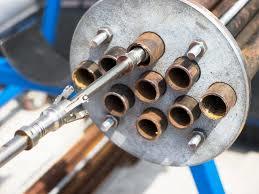

Price:
- 50
- 100
- 200
- 250
- 500
- 1000+

More Products in Advanced Non Destructive Testing Category
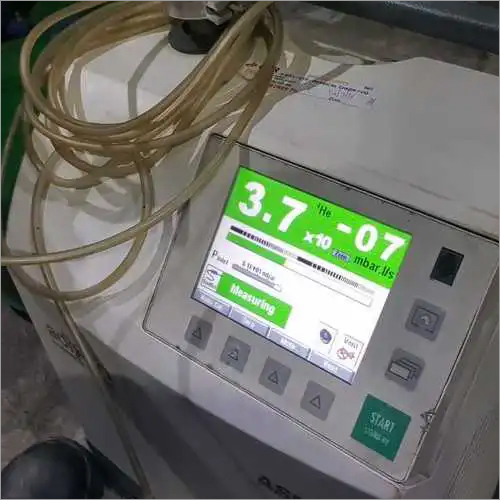
Helium Leak Testing
Usage & Applications : Vacuum Systems, Automotive, Aerospace, Pharmaceutical, Power Plant Equipment, Sealed Components Testing
Frequency : 50/60 Hz
Display : Digital LCD/LED
Driven Type : Electric
Material : Stainless Steel, Aluminum, Brass
Size : Customizable or standard depending on application
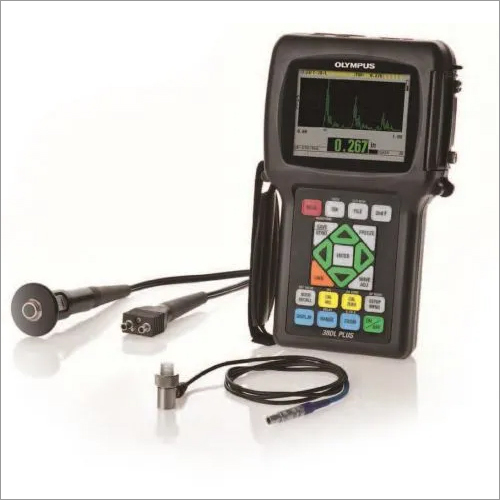
Oxide Scale Measurement of for boiler tubes
Usage & Applications : Onsite measurement of oxide scales on boiler tubes in thermal power plants, refineries, and industrial boilers
Frequency : 50/60 Hz (for AC powered models)
Display : Highcontrast backlit LCD digital display
Driven Type : Microprocessor based electronic
Material : Highgrade stainless steel and industry alloy
Size : Customizable (commonly 860 mm diameter tubes)
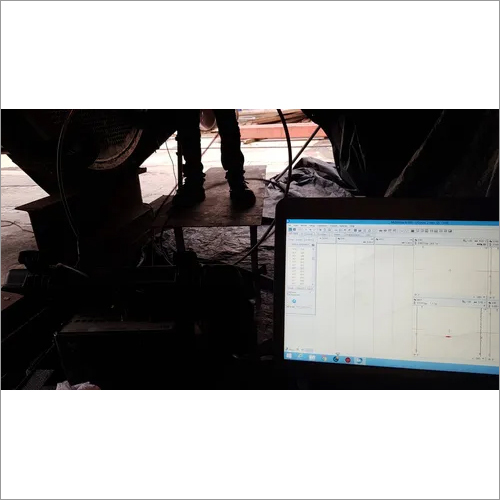
Eddy Current Testing of Heat Exchanger Tubes (ECT)
Usage & Applications : Detection of defects, cracks, corrosion, and wall thinning in heat exchanger and condenser tubes in various industries such as power plants, refineries, petrochemical, and HVAC plants
Frequency : 10 Hz to 10 MHz adjustable
Display : LCD/LED digital display
Driven Type : Electrically operated
Material : Stainless Steel, Copper, Brass, Titanium (as per tube material)
Size : Any tube OD, typically 6mm to 50mm
Remote Field Eddy Current Testing of Heat Exchanger Tubes
Usage & Applications : Detection of corrosion, wall loss, pitting in heat exchanger tubes
Frequency : 10 Hz to 50 kHz (test selectable)
Display : Color LCD digital display, realtime flaw imaging
Driven Type : Electric, automated probe drive
Material : Nonferromagnetic alloys, stainless steel compatible
Size : Suitable for tube inner diameters 12mm to 50mm



Contact Details
AN NABL Accredited Lab For Mechanical & Chemical Testing Of Metals
 Send Inquiry
ITE Lab Division
Barola, Sector - 49 Noida, Uttar Pradesh - 201301
Industrial Facility Address :
Inspection & Testing Engineers
F-22 & F-23, Site - C, UPSIDC, Surajpur Industrial Area, Surajpur, Greater Noida, Uttar Pradesh

 |
INSPECTION & TESTING ENGINEERS
All Rights Reserved.(Terms of Use) Developed and Managed by Infocom Network Private Limited. |
