 English
 Spanish
 French
 German
 Italian
 Chinese (Simplified)
 Japanese
 Korean
 Arabic
 Portuguese




 Send Inquiry
Hardness Testing Course
Hardness Testing Course Specification
- Examination
- Online / Offline
- Assessment Method
- Practical & Theoretical
- Prerequisite
- Basic knowledge of materials
- Placement Assistance
- Available
- Study Material
- Provided
- Course Type
- Certification
- Certificate Validity
- Lifetime
- Instructor Qualification
- Industry Experts
- Training Material Format
- Digital/PDF
- Hands-on Practice
- Available
- Course Coverage
- Rockwell, Brinell, Vickers hardness testing
- Batch Size
- Customizable
- Support
- Post-training support available
About Hardness Testing Course
Hardness Testing Course/Hardness Testing Certification
Our Destructive Testing Lab Division is accredieted as per the ISO 17025 by the National Accreditation Board for Testing and Calibration Laboratories (NABL). It is accredieted in the field of Chemical & Mechanical Testing of Metals. This is the most renowned and highest accredition granted to the laboratories having specialization in Hardness Testing Certification, Hardness Testing Course, Material Testing and Calibration services. And this is why, client trust us and avail the benefits of our services.
THE TERM HARDNESS is defined as the capability of a material to have a strong resistance against indentation or deformation when in comes in contact with an indenter under load. Normally, a hardness test includes the pressing of an indenter of known mechanical and geometry properties into the test material. Material hardness is tested by using the various types of scales. These scales indirectly or directly indicates the contact pressure, which is involved in deformation of the test surface. During the testing, the indenter is pressed into the material and therefore, the hardness is also considered as the ability of a material to withstand the compressive loads. Indenter may be Pyramidal (Vickers and Knoop Tests), Spherical (Brinell Test) Or Conical (Rockwell Test). The depth of indentation in the Rockwell tests is resolved and converted to a hardness number. It is done without the measurement units. While in the Vickers, Knoop and Brinell tests, the hardness value is reckoned as the load backed by unit area of the indentation. It is expressed in (kgf/mm2) kilograms per square millimeter.
Nowadays, the hardness testing certification/hardness testing course is not limited to metals. Due to the availability of modern tools and innovative procedures, these courses and certifications cover a wide range of materials comprising elastomers, semiconductors, polymers, ceramics and thin films. Hardness measurements express different fundamental aspects of different materials. Therefore, for metal, the hardness is straightway proportionate to the uniaxial yield stress at the strain impelled by the indentation. But it doesn't apply to the polymers as their yield stress is not properly defined. Still, the measurement of hardness is very useful for different properties of polymers like loss modulus and storage. Likewise, the measured hardness of glasses and ceremics might relate to their fracture toughness.
The applications of material is also defined by its hardness. A tribologist may require high hardness to reduce plastic wear and deformation in bearing applications. While a fracture mechanics engineer may think that hard material is brittle and not reliable for impact loads. A production engineer may need less hard materials for increased production, faster and easy machining. While a metallurgist may need lower hardness material for cold rolling of metals. All these factors lead the customers to select different types of materials and production processes in order to get the specific material properties of the final product, which is most of the times, estimated by analysing the hardness of material.
Requirements and descriptions of bend test are given in several other standards such as, ASTM A 370, IS 1586, IS 1501, etc.
Industry-Leading Curriculum
Our course covers all major hardness testing methods: Rockwell, Brinell, and Vickers. Both theoretical principles and direct application are explored, ensuring a strong foundation for real-world scenarios.
Expert-Led Training
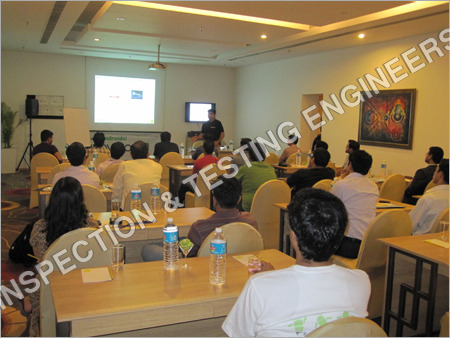
Training is provided by industry-recognized experts who guide participants through digital materials, interactive sessions, and practical demonstrations. Their extensive experience guarantees clarity and relevance in every module.
Comprehensive Support & Certification
Participants receive lifetime validity certification upon successful assessment, along with ongoing post-training support and placement assistance. Study resources are delivered in convenient digital/PDF formats for flexible learning.
FAQs of Hardness Testing Course:
Q: How is hands-on practice incorporated into the Hardness Testing Course?
A: Participants engage in supervised practical sessions using Rockwell, Brinell, and Vickers testing equipment, ensuring direct experience under expert guidance alongside theoretical learning.Q: What are the eligibility criteria for enrolling in this certification course?
A: A basic knowledge of materials is required to enroll. This prerequisite enables learners to grasp advanced hardness testing concepts more effectively.Q: When and where are the classes conducted for this course?
A: Classes are held both online and offline at select locations across India. Batch sizes are customizable, and schedules are arranged to accommodate participant needs.Q: What is the process for obtaining the certification?
A: Certification is granted after successful completion of both theoretical and practical assessments. Examinations are available online or offline, depending on your preference.Q: What format is the study material provided in?
A: All study materials, including guides and reference documents, are delivered digitally in PDF format, allowing easy access throughout the program.Q: How does the placement assistance work after course completion?
A: Placement assistance includes career guidance, resume building, and connections to industry job openings, helping graduates leverage their new certification for professional advancement.Q: What benefits do participants gain from post-training support?
A: Post-training support ensures ongoing access to expert advice, troubleshooting, and updates on industry practices, promoting long-term professional growth and confidence in application.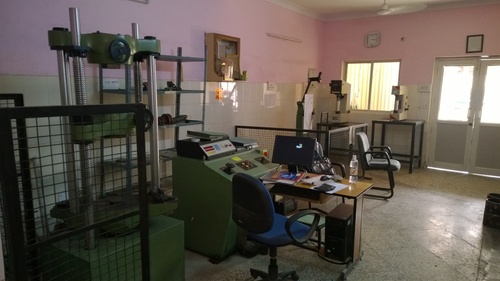

Price:
- 50
- 100
- 200
- 250
- 500
- 1000+

More Products in Non Destructive Testing Training and Certification Category




Contact Details
AN NABL Accredited Lab For Mechanical & Chemical Testing Of Metals
 Send Inquiry
ITE Lab Division
Barola, Sector - 49 Noida, Uttar Pradesh - 201301
Industrial Facility Address :
Inspection & Testing Engineers
F-22 & F-23, Site - C, UPSIDC, Surajpur Industrial Area, Surajpur, Greater Noida, Uttar Pradesh

 |
INSPECTION & TESTING ENGINEERS
All Rights Reserved.(Terms of Use) Developed and Managed by Infocom Network Private Limited. |
