 English
 Spanish
 French
 German
 Italian
 Chinese (Simplified)
 Japanese
 Korean
 Arabic
 Portuguese



 Send Inquiry
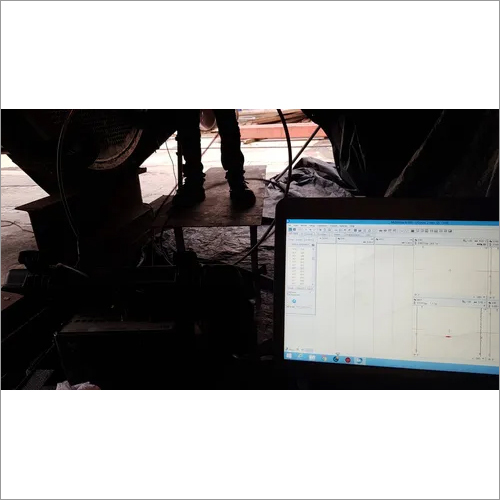
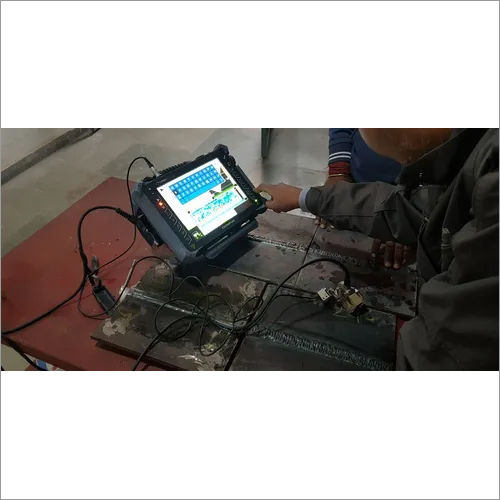
Helium Leak Testing
Helium Leak Testing Specification
- Measuring Range
- 10 to 1 mbar l/s
- Frequency
- 50/60 Hz
- Usage & Applications
- Vacuum Systems, Automotive, Aerospace, Pharmaceutical, Power Plant Equipment, Sealed Components Testing
- Power
- 150-300 W depending on model
- Interface
- Digital and analog output interfaces, RS232/RS485, USB
- Size
- Customizable or standard depending on application
- Display
- Digital LCD/LED
- Material
- Stainless Steel, Aluminum, Brass
- Voltage
- 110-240 V AC
- Weight
- Varies as per model and application
- Driven Type
- Electric
- Temperature
- Operating range: 0C to 50C
- Data Logging
- Onboard memory/USB export
- Display Features
- Backlit for clear reading in low light
- Calibration
- User calibratable or auto-calibration
- Detection Sensitivity
- Up to 1x10 mbar l/s
- Response Time
- <1 second
- System Protection
- Overload protection, Internal Pump Protection
- Instrument Type
- Portable/Benchtop/Console
- Control System
- Microprocessor based
- Leak Detection Type
- Vacuum and Sniffer (Pressure) Method
- Compliance
- CE, ISO 9001
- Test Gas
- Helium
Helium Leak Testing Trade Information
- Payment Terms
- Cash Against Delivery (CAD), Cash on Delivery (COD), Cash in Advance (CID), Cheque, Cash Advance (CA)
- Sample Available
- Yes
- Packaging Details
- NA
- Main Export Market(s)
- Middle East, Africa, Asia
- Main Domestic Market
- North India
- Certifications
- ASNT, NABL, ISO, etc.
About Helium Leak Testing
Helium leak testing is a highly sensitive and precise method used to detect and locate extremely small leaks in sealed systems or components. Utilizing helium as a tracer gas, this non destructive testing technique is widely used in industries such as aerospace, automotive, medical, HVAC, and semiconductor manufacturing. Helium is ideal for leak detection due to its small atomic size, inert properties, and ability to escape through minute openings.
Our helium leak detection services include both vacuum and pressure methods, ensuring compliance with industry standards like ASME, ISO 20485, and MIL STD specifications. Whether youre testing hermetic seals, vacuum systems, or pressure vessels, we deliver reliable and repeatable results with high sensitivity detecting leaks.
Key Benefits of Helium Leak Testing:
-
Exceptional sensitivity for detecting micro leaks
-
Fast, accurate, and non-destructive
-
Suitable for both production and R&D environments
-
Compliant with international testing standards
Trust our experts for comprehensive helium leak testing services to ensure your systems meet stringent quality and safety requirements.
Areas Served :- Delhi, Uttar Pradesh, Haryana, Punjab, Maharashtra, Bihar, Rajasthan, Himachal Pradesh, Uttarakhand, Madhya Pradesh, Jammu & Kashmir, Gujarat, Sikkim, Greater Noida, Ghaziabad, Noida, Nepal, Entire North India and South India, United Arab Emirates, Dubai, Qatar, Saudi Arabia, Africa, Egypt, Bahrain, Oman, etc.
Product details
|
Service Type |
Condenser leak testing for vacuum drop |
|
Test Location |
Pan India |
|
Usage/Application |
Mechanical Engineering |
|
Sampling Procedure |
Customer Place |
|
Display Type |
Digital |
|
Testing Methodology |
Helium Leak Testingg |
|
Testing Type |
Pressure Testing |
|
Application Type |
Power Plant |
|
Product Type |
Condenser |
|
Power Source |
Electric |
|
Value Data Report On |
Leakage rate |
|
Accuracy |
2 % FS |
|
Mode |
Online |
|
Detection Range |
0-1500 ppm |
Advanced Detection Sensitivity
Our helium leak testers are engineered to detect leaks as small as 1x10 mbar l/s, meeting the needs of high-precision industries. This heightened sensitivity enables the identification of even micro-leaks, ensuring product integrity and safety for demanding applications such as aerospace, pharmaceuticals, and power plants.
Versatile Instrument Design
Choose from portable, benchtop, or console models tailored for varied testing environments. These instruments are constructed using robust materials like stainless steel, aluminum, and brass. Their compact yet sturdy designs guarantee durability, efficiency, and adaptability, making them suitable for specialized requirements or standard applications alike.
Intuitive Control and Data Management
Benefit from microprocessor-based control systems and backlit LCD/LED displays for seamless operation in all lighting conditions. The integrated data logging feature, complete with onboard memory and USB export capability, ensures secure test records and simple data retrieval, supporting traceability and reporting standards.
Comprehensive System Protection
Our leak detectors prioritize system longevity with overload and internal pump protection mechanisms. These features safeguard critical components from operational stress, reducing downtime and maintenance costs while boosting reliability during extensive testing procedures.
FAQs of Helium Leak Testing:
Q: How does the helium leak testing process work using vacuum and sniffer methods?
A: Helium leak testing involves filling the test specimen with helium or placing it under vacuum, then detecting escaping helium using vacuum or sniffer techniques. The instrument measures minute helium concentrations, offering rapid results with detection sensitivity up to 1x10 mbar l/s.Q: What types of applications can this helium leak detector be used for?
A: This detector is suitable for vacuum systems, automotive and aerospace components, pharmaceutical production, power plant equipment, and sealed container testing. Its customizable designs and high sensitivity make it ideal for stringent leak detection requirements across multiple industries.Q: When should I calibrate the helium leak detector for optimal performance?
A: Calibration should be performed during initial setup, after prolonged usage, or as per your organizations scheduled maintenance plan. The instrument supports user calibration or convenient auto-calibration to maintain measurement accuracy throughout its service life.Q: Where is this helium leak testing system typically installed or operated?
A: Depending on your application, the detector can be used as a portable unit for field testing, benchtop for laboratory environments, or console installations for production lines. Its flexible design allows it to adapt to various operation settings.Q: What benefits does the microprocessor-based control system offer?
A: A microprocessor-based control ensures precise operation, real-time diagnostics, and consistent test results. It improves user experience by automating processes, enabling efficient data management, and integrating protection features for reliable performance.Q: How do I export or manage the leak test data from the instrument?
A: You can store test results using onboard memory and export data via the USB interface. This feature streamlines documentation, supports compliance with quality standards (CE, ISO 9001), and facilitates easy record retrieval for analysis and reporting.Q: What protection features safeguard the system during use?
A: Overload and internal pump protection mechanisms are integrated to prevent damage during intensive operations. These features help extend instrument lifespan, minimize unplanned downtimes, and ensure consistent performance under varying load conditions.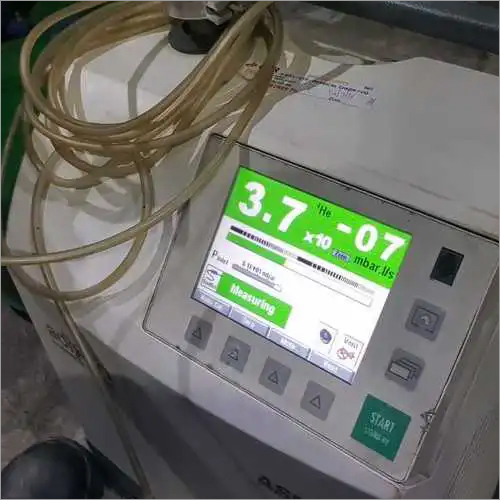

Price:
- 50
- 100
- 200
- 250
- 500
- 1000+

More Products in Advanced Non Destructive Testing Category
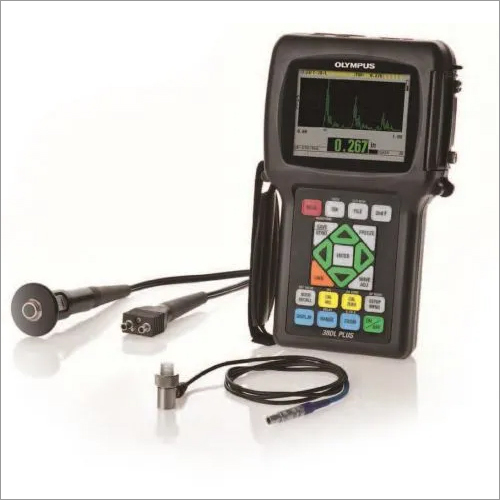
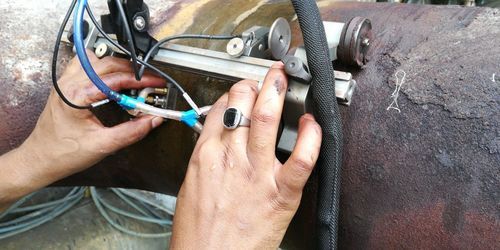
Oxide Scale Measurement of for boiler tubes
Frequency : 50/60 Hz (for AC powered models)
Measuring Range : 05 mm (oxide scale thickness)
Power : Battery operated or mains powered
Usage & Applications : Onsite measurement of oxide scales on boiler tubes in thermal power plants, refineries, and industrial boilers
Size : Customizable (commonly 860 mm diameter tubes)
Interface : Digital with USB or serial output (RS232/RS485 options)
Time of Flight Diffraction
Frequency : 50/60 Hz
Measuring Range : 1 mm to 500 mm (depending on probe and material)
Power : Rechargeable Lithiumion Battery or Mains
Usage & Applications : Detection and sizing of flaws, weld inspection and corrosion mapping in metals
Size : Portable, Handheld Unit
Interface : USB, Ethernet
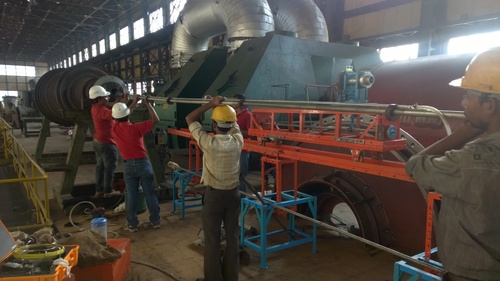
Borescopic Inspection Services
Frequency : 50 Hz/60 Hz power compatible
Measuring Range : Visual inspection only; Not a dimensional measuring tool
Power : Rechargeable battery or mains powered supply
Usage & Applications : Internal visual inspection of inaccessible areas in pipelines, turbines, engines, vessels, welds, and structural cavities across industry sectors such as Oil & Gas, Aviation, Power, and Manufacturing.
Size : Customizable Probe Lengths (commonly 1m to 10m)
Interface : Compatible with digital displays, USB, SD card, and video output interfaces.
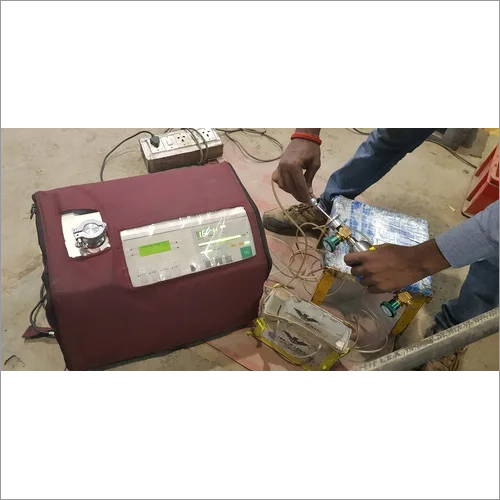
Online Condenser Helium Leak Testing
Frequency : 50/60 Hz
Measuring Range : 1 x 10 mbarl/sec to 1 x 10 mbarl/sec
Power : 1.52 kW
Usage & Applications : For detecting and measuring leaks in online condenser systems using helium as tracer gas
Size : Custom / As per requirement
Interface : Digital Interface with alarm system



Contact Details
AN NABL Accredited Lab For Mechanical & Chemical Testing Of Metals
 Send Inquiry
ITE Lab Division
Barola, Sector - 49 Noida, Uttar Pradesh - 201301
Industrial Facility Address :
Inspection & Testing Engineers
F-22 & F-23, Site - C, UPSIDC, Surajpur Industrial Area, Surajpur, Greater Noida, Uttar Pradesh

 |
INSPECTION & TESTING ENGINEERS
All Rights Reserved.(Terms of Use) Developed and Managed by Infocom Network Private Limited. |
